
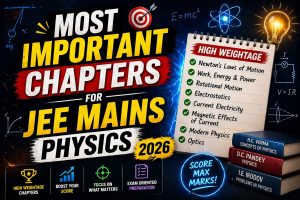
Physics is the section that most powerfully determines your JEE Mains rank. While Chemistry rewards systematic coverage and Mathematics rewards problem-solving speed, Physics rewards genuine conceptual understanding combined with strategic preparation — and strategic preparation begins with knowing exactly which chapters to prioritise.
Sanjeev Kumar (Rishi Sir), founder of bestphysicsteacher.in, gold medallist in M.Sc. Physics, and a teacher with over 15 years of frontline JEE and NEET coaching experience at India’s premier institutes including Aakash, Narayana, Pathfinder, and Brilliant, has analysed every JEE Mains Physics paper from the past decade in precise detail. This guide presents his complete, data-driven chapter priority framework — so you study smarter, not just harder.
Why Chapter Prioritisation Is Non-Negotiable for JEE Mains 2026
The JEE Mains Physics syllabus is vast. Covering every chapter with equal depth in the available preparation time is not realistic — and it is not necessary. Smart preparation means identifying the chapters that carry the highest marks, preparing them to the deepest level, and ensuring that high-frequency topics never cost you marks.
Sanjeev Kumar (Rishi Sir)’s analysis of JEE Mains papers from 2015 to 2024 at bestphysicsteacher.in reveals consistent patterns: certain chapters appear every single year with multiple questions, certain chapters carry disproportionately high marks relative to their preparation difficulty, and certain chapters offer the highest return on study time invested.
This guide gives you that analysis — and tells you exactly how to use it.
The Top 10 High-Priority Chapters for JEE Mains Physics 2026
Sanjeev Kumar (Rishi Sir) has identified these ten chapters as the highest-priority targets for JEE Mains 2026 Physics preparation at bestphysicsteacher.in, based on historical frequency, marks contribution, and preparation efficiency.
1. Laws of Motion — The Conceptual Backbone
Historical frequency: 1–2 questions every paper, often integrated into multi-concept problems Difficulty level: Moderate — conceptual and numerical Marks contribution: High — both directly and as foundation for other chapters
Laws of Motion is the chapter that most directly determines whether Mechanics — JEE’s highest-weightage domain — will be your strongest section or your weakest. Every force problem in every subsequent Mechanics chapter draws on the principles established here.
Sanjeev Kumar (Rishi Sir)’s priority areas at bestphysicsteacher.in: Newton’s Three Laws with full conceptual depth, free body diagram construction for every scenario, friction (static, kinetic, and rolling), impulse and momentum, and connected body problems involving pulleys and inclined planes. Pseudo forces in non-inertial frames appear regularly in JEE Mains and require specific conceptual preparation.
Rishi Sir’s instruction: master free body diagrams before attempting any numerical. A correct FBD resolves the majority of Laws of Motion problems.
2. Current Electricity — Consistent and Scoring
Historical frequency: 2 questions in almost every paper Difficulty level: Moderate — formula-based with conceptual application Marks contribution: Very high — reliable and repeatable
Current Electricity is one of the most consistently tested chapters in JEE Mains Physics history. It appears in virtually every paper, the question types are predictable, and thorough preparation converts it into near-guaranteed marks.
Sanjeev Kumar (Rishi Sir)’s priority areas at bestphysicsteacher.in: Ohm’s Law and resistivity, series and parallel combinations, Kirchhoff’s Laws with complex circuit applications, Wheatstone bridge conditions, potentiometer and meter bridge principles, power dissipation and heating effects.
Rishi Sir’s instruction: Kirchhoff’s Laws problems must be solved step-by-step without shortcuts. One sign error in current direction ruins the entire circuit analysis.
3. Work, Energy and Power — The Conservation Powerhouse
Historical frequency: 1–2 questions per paper, often embedded in Mechanics problems Difficulty level: Moderate — conceptual understanding drives performance Marks contribution: High — both directly and as a cross-chapter tool
The work-energy theorem and conservation of mechanical energy are among the most versatile problem-solving tools in all of JEE Physics. They appear directly in Work, Energy and Power questions — and they appear indirectly in Gravitation, Rotational Motion, Electrostatics, and virtually every other domain that involves energy.
Sanjeev Kumar (Rishi Sir)’s priority areas at bestphysicsteacher.in: work done by constant and variable forces, kinetic and potential energy relationships, conservation of mechanical energy, power and efficiency, elastic and inelastic collisions, and vertical circular motion.
Rishi Sir’s instruction: always identify whether mechanical energy is conserved before choosing your approach. This single decision determines the most efficient solution path.
4. Rotational Motion — The High-Difficulty High-Reward Chapter
Historical frequency: 1–2 questions per paper, sometimes more in advanced sessions Difficulty level: High — the chapter that separates JEE rankers most distinctly Marks contribution: Very high — questions reward deep preparation disproportionately
Rotational Motion is consistently cited by JEE toppers as the chapter where thorough preparation produces the most dramatic rank improvement. It is difficult, it is frequently tested, and students who master it gain marks that most of the competition cannot.
Sanjeev Kumar (Rishi Sir)’s priority areas at bestphysicsteacher.in: torque and its relationship to angular acceleration, moment of inertia calculations (parallel and perpendicular axis theorems), angular momentum and its conservation, rolling without slipping conditions, and problems combining rotational and translational motion.
Rishi Sir’s instruction: Rotational Motion cannot be prepared through formula memorisation. Every concept must be derived and understood — particularly the conditions under which angular momentum is conserved. Rishi Sir gives this chapter more time than any other at bestphysicsteacher.in.
5. Ray Optics and Wave Optics — Systematic and Highly Scoring
Historical frequency: 2–3 questions per paper across both sub-sections Difficulty level: Moderate — systematic preparation produces reliable marks Marks contribution: High — both conceptual and numerical questions appear regularly
Optics is one of the most reliable scoring opportunities in JEE Mains Physics for students who prepare it systematically. The question types are predictable, the conceptual depth required is manageable, and the problems reward organised thinking over raw calculation ability.
Sanjeev Kumar (Rishi Sir)’s priority areas at bestphysicsteacher.in for Ray Optics: reflection from curved mirrors (sign convention mastery is essential), refraction at plane and curved surfaces, lens formula and lens maker’s equation, prism and dispersion, and optical instruments. For Wave Optics: Huygens’ principle, Young’s Double Slit Experiment (every variation), diffraction patterns, and polarisation concepts.
Rishi Sir’s instruction: choose one sign convention for Optics and never deviate from it across any problem. The majority of Ray Optics errors trace back to sign convention inconsistency.
6. Electromagnetic Induction and Alternating Currents — High Weightage, High Return
Historical frequency: 2–3 questions per paper consistently Difficulty level: Moderate to high — conceptual and numerical both appear Marks contribution: Very high — one of the highest-weightage chapter pairs in JEE Mains
EMI and AC circuits together form one of the most heavily tested chapter pairs in JEE Mains Physics. They are challenging enough to separate well-prepared students from average ones — but manageable enough that thorough preparation converts them into reliable marks.
Sanjeev Kumar (Rishi Sir)’s priority areas at bestphysicsteacher.in: Faraday’s Law applications, Lenz’s Law (direction of induced current), motional EMF problems, self and mutual induction, LCR series circuit analysis, resonance conditions and frequencies, power in AC circuits, and transformer applications.
Rishi Sir’s instruction: Lenz’s Law must be understood physically — not as a rule to memorise, but as the physical consequence of energy conservation. This understanding resolves the majority of EMI conceptual questions.
7. Thermodynamics and Kinetic Theory — Concept-Driven and Scoring
Historical frequency: 2 questions per paper, sometimes with Chemistry overlap Difficulty level: Moderate — P-V diagram mastery is the key skill Marks contribution: High — preparation efficiency is excellent
Thermodynamics and Kinetic Theory reward students who understand physical principles more than students who memorise formulas. The questions are frequently conceptual, the formula set is manageable, and there is genuine cross-subject overlap with Chemistry that amplifies the return on preparation time.
Sanjeev Kumar (Rishi Sir)’s priority areas at bestphysicsteacher.in: First and Second Laws of Thermodynamics, isothermal, adiabatic, isobaric, and isochoric processes with P-V diagram representations, Carnot engine efficiency, kinetic theory gas pressure derivation, RMS speed and average speed, degrees of freedom, and law of equipartition of energy.
Rishi Sir’s instruction: draw the P-V diagram for every thermodynamic problem before writing any equation. The diagram reveals the process type, work done sign, and heat flow direction simultaneously.
8. Modern Physics — The Most Reliable Mark Bank in JEE Mains
Historical frequency: 3–4 questions per paper across all sub-sections Difficulty level: Low to moderate — the highest marks-per-study-time ratio in JEE Physics Marks contribution: Extremely high — non-negotiable for any serious aspirant
Modern Physics is Sanjeev Kumar (Rishi Sir)’s most strongly recommended priority chapter at bestphysicsteacher.in for one specific reason: it offers the best return on preparation time of any chapter in JEE Mains Physics. The concepts are accessible, the question types are predictable, the formula set is manageable — and it appears in every paper with multiple questions.
Sanjeev Kumar (Rishi Sir)’s priority areas at bestphysicsteacher.in: photoelectric effect (frequency vs intensity distinction is the most commonly tested conceptual point), de Broglie wavelength, Bohr model energy levels and hydrogen spectrum, radioactive decay types and half-life calculations, binding energy per nucleon, nuclear fission and fusion energy calculations, and semiconductor devices (p-n junction, Zener diode, transistor configurations, and logic gates).
Rishi Sir’s instruction: Modern Physics is where disciplined preparation produces guaranteed marks. Master every standard problem type completely. Leave nothing uncertain in this chapter.
9. Capacitance and Electrostatics — Conceptual and Consistently Tested
Historical frequency: 2 questions per paper, often integrated with Electric Fields Difficulty level: Moderate — vector analysis of fields is the main challenge Marks contribution: High — appears in every paper reliably
Electrostatics and Capacitance form the conceptual foundation for the entire Electromagnetism domain. Strong preparation here makes Current Electricity, Magnetic Effects, and EMI significantly more accessible — multiplying the value of the preparation investment.
Sanjeev Kumar (Rishi Sir)’s priority areas at bestphysicsteacher.in: Coulomb’s Law and superposition principle, electric field calculations using Gauss’s Law, electric potential and potential energy, equipotential surfaces, capacitor combinations (series and parallel), dielectric effects on capacitance and energy storage, and energy stored in electric fields.
Rishi Sir’s instruction: Gauss’s Law problems require choosing the right Gaussian surface before any calculation. The choice of surface is the conceptual skill — the calculation is straightforward once the surface is correctly identified.
10. Magnetism and Moving Charges — Visual and Graph-Heavy
Historical frequency: 1–2 questions per paper, often with diagram or graph components Difficulty level: Moderate — three-dimensional visualisation is the key skill Marks contribution: High — appears consistently with both conceptual and numerical questions
Magnetism and Moving Charges is the chapter where Sanjeev Kumar (Rishi Sir)’s visualisation-based teaching at bestphysicsteacher.in produces the most dramatic improvement for students who previously found it confusing. The chapter’s difficulty is primarily visual — the physics itself is manageable once the three-dimensional field and force directions are genuinely understood.
Sanjeev Kumar (Rishi Sir)’s priority areas at bestphysicsteacher.in: Biot-Savart Law applications, Ampere’s Circuital Law for standard configurations, magnetic force on moving charges (circular and helical motion), force on current-carrying conductors, magnetic dipole behaviour in external fields, and Earth’s magnetism concepts.
Rishi Sir’s instruction: the right-hand rule and Fleming’s Left-Hand Rule must become completely instinctive. Rishi Sir uses three-dimensional simulations at bestphysicsteacher.in to make magnetic field directions genuinely visible.
Sanjeev Kumar (Rishi Sir)’s Complete JEE Mains Physics Priority Framework
Tier 1 — Maximum Priority (Prepare to Complete Mastery)
These chapters appear in every JEE Mains paper with the highest combined marks contribution. They must be prepared to the deepest level:
Mechanics Group: Laws of Motion, Work Energy and Power, Rotational Motion Electromagnetism Group: Current Electricity, Electrostatics and Capacitance, EMI and AC Circuits Modern Physics: Complete — all sub-sections
Tier 2 — High Priority (Prepare Thoroughly)
These chapters appear consistently with high marks contribution and excellent preparation efficiency:
Optics: Ray Optics and Wave Optics Thermodynamics: Thermodynamics and Kinetic Theory Magnetism: Magnetic Effects and Moving Charges
Tier 3 — Important (Prepare Solidly)
These chapters appear regularly and should not be neglected, but require proportionally less preparation time than Tiers 1 and 2:
Mechanics: Kinematics, Gravitation, Properties of Solids and Fluids Waves and Oscillations: SHM and Wave Motion Electromagnetism: Electromagnetic Waves
Rishi Sir’s strategic principle at bestphysicsteacher.in: complete mastery of Tier 1 chapters alone can produce a Physics score of 60–70 in JEE Mains. Adding Tier 2 mastery takes you to 80–90. Full Tier 3 coverage takes you to 90+.
The Most Common Preparation Mistakes — And How to Avoid Them
Sanjeev Kumar (Rishi Sir) observes these mistakes consistently among students who approach bestphysicsteacher.in after struggling with JEE Physics:
Mistake 1: Equal time on all chapters regardless of weightage The strategic error that most limits JEE Physics scores. Students who spend equal time on every chapter inevitably under-prepare the high-weightage chapters while over-preparing the low-weightage ones.
Rishi Sir’s solution: the priority framework above is not a suggestion — it is a time allocation map. Tier 1 chapters receive the most time. Tier 3 chapters receive sufficient time. This allocation maximises marks per hour of preparation.
Mistake 2: Memorising formulas without understanding derivations The fundamental preparation error in Physics. NEET and JEE both test application and reasoning — not recall. A formula memorised without its derivation and conditions of applicability is a liability, not an asset.
Rishi Sir’s solution: for every formula, understand the derivation and the physical conditions under which it applies before solving a single problem. This adds time upfront and saves dramatically more time in problem-solving and revision.
Mistake 3: Using too many reference books Three books studied thoroughly produce far better results than ten books skimmed. Students who collect too many resources end up with incomplete coverage of all of them.
Rishi Sir’s recommended resource set at bestphysicsteacher.in: NCERT (mandatory foundation), H.C. Verma (conceptual depth), D.C. Pandey (extensive objective practice), and JEE PYQs (most authentic exam practice). These four resources, mastered completely, are sufficient for 90+ in JEE Mains Physics.
Mistake 4: Skipping mock test analysis Taking a mock test and checking only the score is one of the most wasteful preparation activities available. The value of a mock test is entirely in the analysis — what errors were made, why they were made, and what specific preparation action will prevent them from recurring.
Rishi Sir’s solution: analysis time must equal or exceed test time. At bestphysicsteacher.in, Sanjeev Kumar (Rishi Sir) reviews every student’s Physics section performance personally, converting each test into an individual improvement roadmap.
Mistake 5: Neglecting NCERT for JEE Mains A significant proportion of JEE Mains Physics questions are directly or closely derived from NCERT. Students who skip NCERT in favour of reference books immediately miss these marks.
Rishi Sir’s solution: NCERT is the starting point for every chapter, without exception. Every concept, every solved example, every exercise question — before any reference book is opened.
The 60-Day Final Preparation Plan — Rishi Sir’s Framework
Sanjeev Kumar (Rishi Sir) structures the final 60 days before JEE Mains at bestphysicsteacher.in around three focused phases:
Days 1–20: High-Priority Chapter Consolidation Complete revision of all Tier 1 chapters using short notes, formula sheets, and error log review. Daily practice of 30–40 Physics MCQs exclusively from Tier 1 topics. Chapter-wise PYQ solving with detailed analysis.
Days 21–40: Full Syllabus Integration and Mock Testing Full-length mock tests every 2–3 days under strict exam conditions. Comprehensive post-test analysis with Rishi Sir’s personal review. Tier 2 chapter revision alongside mock test preparation. Error log update and weekly review.
Days 41–60: Peak Performance Preparation Daily full-length mock tests. Analysis focused on pattern identification — what error types recur, what chapters continue to produce mistakes. No new material — only revision, practice, and analysis. Final formula sheet review in the last 3 days.
Rishi Sir’s non-negotiable rule for the final 60 days: no new topics, no new books. Master what you have prepared. Trust your preparation.
Daily Practice Strategy — Building to 90+
Sanjeev Kumar (Rishi Sir) recommends this daily practice structure for JEE Mains Physics at bestphysicsteacher.in:
Concept revision: 30 minutes on the day’s topic using short notes and formula sheets.
Problem practice: 20–25 MCQs from the current priority chapter — timed, with full analysis of every incorrect answer.
PYQ practice: 10–15 previous year questions from high-priority chapters — treated as diagnostic tools, not just practice.
Error log maintenance: 15 minutes updating and reviewing the error log from the day’s practice.
Formula sheet review: 10 minutes reviewing the complete formula notebook — every chapter, every day.
This 90-minute daily Physics practice structure, maintained consistently over the preparation period, produces the incremental gains that compound into 90+ on exam day.
Why Conceptual Understanding Beats Memorisation — Every Time in JEE
Sanjeev Kumar (Rishi Sir) emphasises this at bestphysicsteacher.in with every new JEE student: the questions that determine whether you score 70 or 90 in JEE Mains Physics are not the formula-application questions. They are the conceptual questions, the multi-concept integration questions, and the reasoning questions that reward genuine understanding over memorisation.
A student who understands why the range of a projectile is maximum at 45° can handle any projectile variation — inclined launch, non-uniform gravity, combined with another concept. A student who memorised the 45° fact cannot.
A student who understands the physical basis of Lenz’s Law can determine the direction of any induced current in any scenario. A student who memorised induced current directions for standard configurations cannot.
This is why Rishi Sir’s teaching at bestphysicsteacher.in is built entirely on conceptual understanding — not on formula delivery and problem pattern recognition. The 90+ score in JEE Mains Physics requires understanding. Rishi Sir builds it.
What Students at bestphysicsteacher.in Receive for JEE Mains Physics
Under Sanjeev Kumar (Rishi Sir)’s guidance, every student at bestphysicsteacher.in receives the complete JEE Mains Physics preparation system:
- Live interactive classes built on visualisation-first, conceptual teaching for every priority chapter
- Recorded lectures for every topic with unlimited revision access
- Topic-wise modules and Rishi Sir’s handwritten notes for all high-priority chapters
- Chapter-wise formula sheets with derivation context and application conditions
- Chapter-wise and full-syllabus mock tests calibrated to JEE Mains difficulty
- Personal mock test Physics section review sessions with Rishi Sir
- Weekly progress reports with individual targeted improvement planning
- Dedicated one-on-one doubt-clearing sessions directly with Rishi Sir
- Structured 60-day final preparation plan
- Career guidance and motivation sessions throughout preparation
Frequently Asked Questions
Q: Which single chapter gives the highest return on preparation time in JEE Mains Physics?
Sanjeev Kumar (Rishi Sir)’s answer at bestphysicsteacher.in: Modern Physics. It carries 3–4 questions in every paper, the preparation difficulty is relatively low, and the question types are highly predictable. Every aspirant should achieve near-perfect preparation in Modern Physics before the exam.
Q: How much time should I spend on Rotational Motion given its difficulty?
Rishi Sir’s guidance: Rotational Motion deserves more preparation time than its direct weightage suggests, because mastering it also strengthens your understanding of Mechanics broadly — and because the questions it produces are the ones most other students get wrong. The competitive advantage from mastering Rotational Motion is disproportionate.
Q: Should I attempt all Physics questions in JEE Mains or skip difficult ones?
Sanjeev Kumar (Rishi Sir)’s exam strategy at bestphysicsteacher.in: first pass all easy and moderate questions — these are your guaranteed marks. Then attempt moderate-to-difficult questions where you have a clear approach. Leave genuinely unclear questions — the negative marking makes uninformed guessing counterproductive. This strategy consistently produces higher scores than attempting every question.
Q: Is NCERT sufficient for JEE Mains Physics?
NCERT is necessary but not sufficient. It provides the conceptual foundation and covers directly tested content — but does not provide the problem variety and difficulty needed for 90+. Rishi Sir’s recommended combination at bestphysicsteacher.in: NCERT plus H.C. Verma plus D.C. Pandey plus JEE PYQs.
Q: Who is the best physics teacher for JEE Mains in Delhi and online?
Sanjeev Kumar (Rishi Sir) at bestphysicsteacher.in — gold medal in M.Sc. Physics, 15+ years at Aakash, Narayana, Pathfinder, and Brilliant — is consistently recommended as one of India’s finest JEE Physics teachers, available online to students across India with the same personal attention and conceptual teaching quality that previously required attending top offline institutes in person.
Final Words from Sanjeev Kumar (Rishi Sir)
“Every year, students come to bestphysicsteacher.in asking which chapters to study. My answer is always the same: study all of them — but study them in the right order, with the right depth, and with the right analysis of your performance. The chapters in this guide are not shortcuts. They are priorities — the places where every hour of preparation produces the most marks. Master them completely. Build the conceptual foundation that makes every question in those chapters feel familiar. Combine that with daily mock test practice and rigorous error analysis. That is the formula for 90+ in JEE Mains Physics. It is not complicated. It is consistent.”
— Sanjeev Kumar (Rishi Sir), bestphysicsteacher.in
Ready to master the most important JEE Mains Physics chapters with India’s most experienced mentor? Join Sanjeev Kumar (Rishi Sir) at bestphysicsteacher.in today.
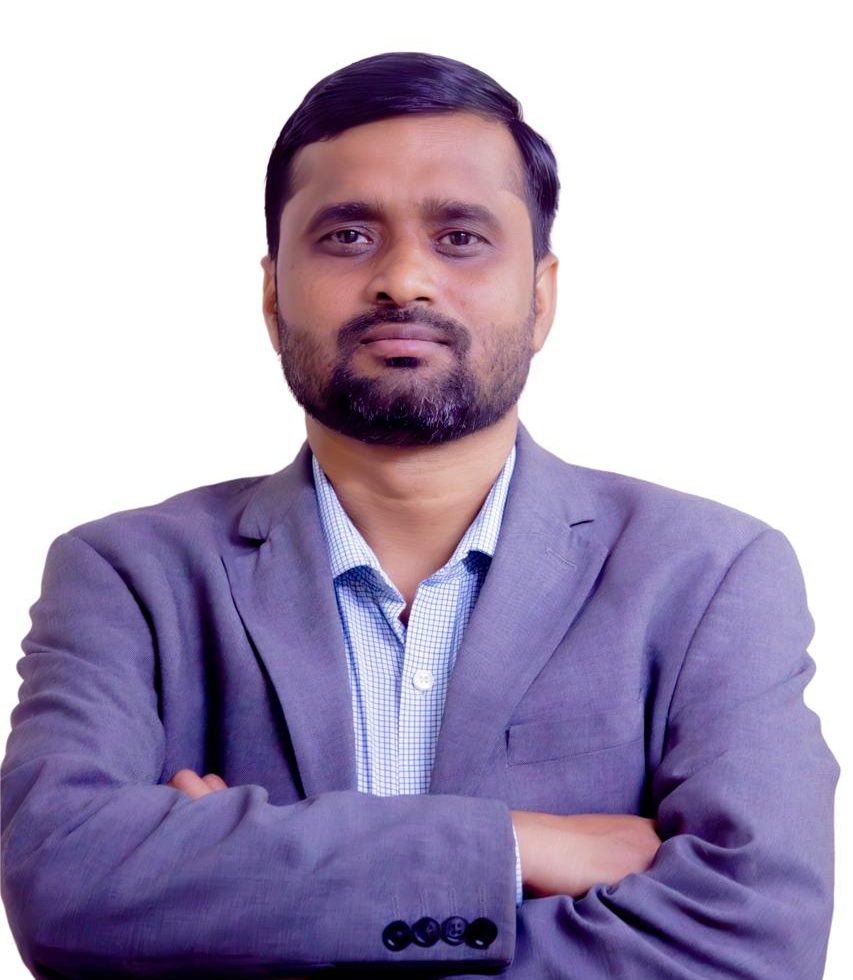
Sanjeev Kumar (Rishi Sir) is a highly respected Physics educator with 15+ years of teaching experience. A Gold Medalist in M.Sc. Physics, he has taught at leading institutes such as Aakash, Pathfinder, Narayana, and Brilliant Tutorials. He specializes in CBSE, ICSE–ISC, IB, NEET, BITSAT, and IIT-JEE (Mains & Advanced) preparation. Known for his concept-based and result-oriented teaching, he has guided thousands of students to success in board and competitive exams.